

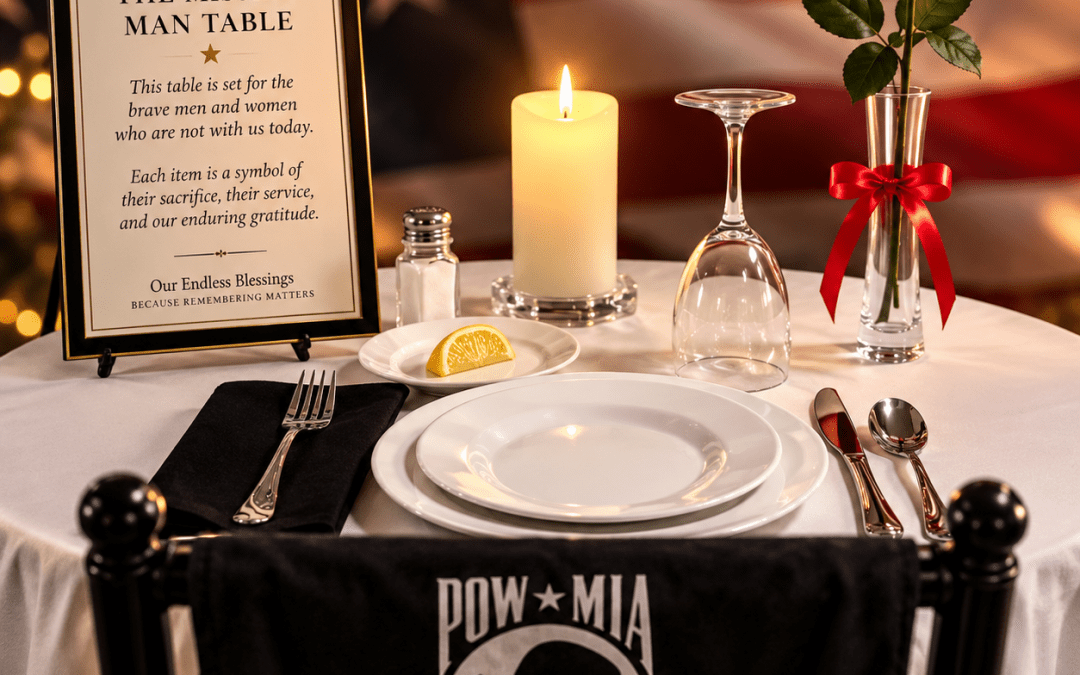
Every September, on the third Friday of the month, we observe National POW/MIA Recognition Day. This year, that’s September 18th. Here’s a small tradition you’ll see in military dining halls, at Veterans Day and Memorial Day services, and at veteran organizations all over the country: the Missing Man Table. It’s quiet, it’s simple, and every item on it means something.
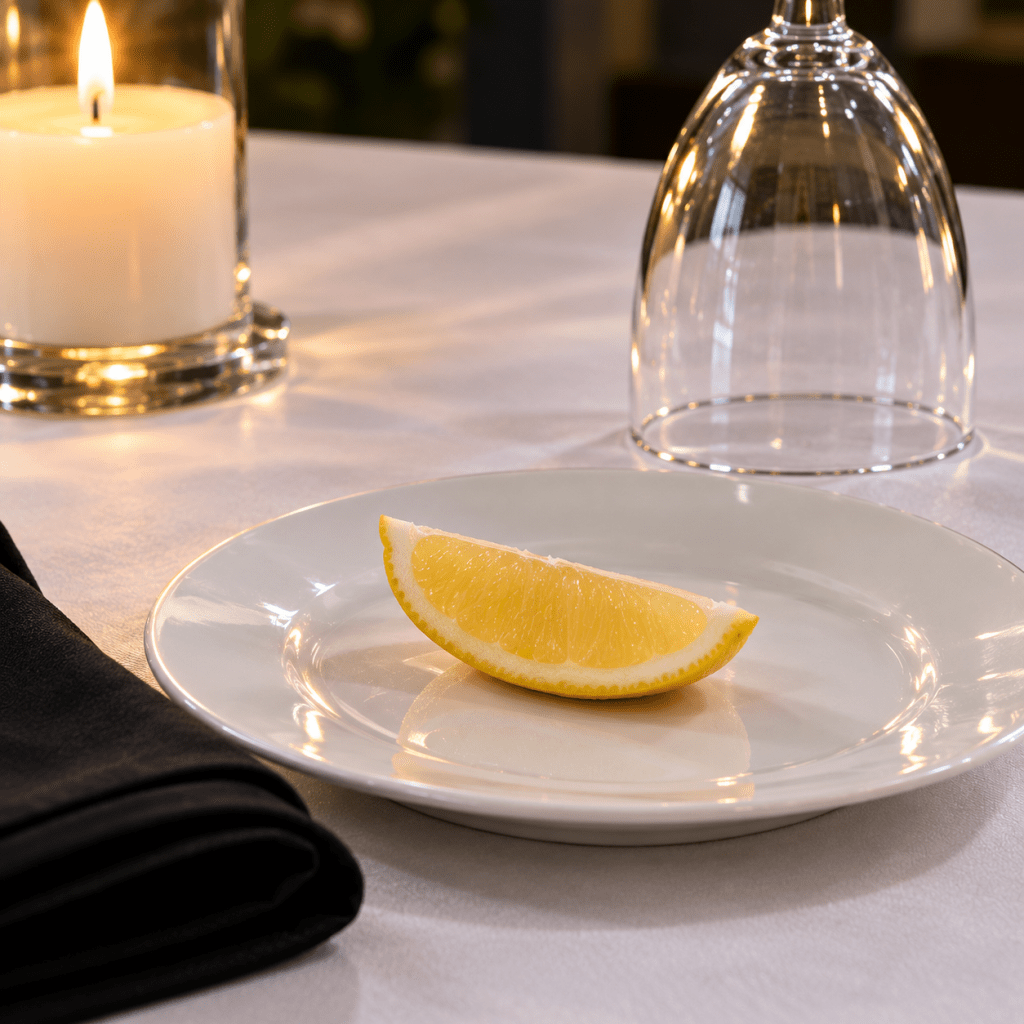
The lemon on the plate
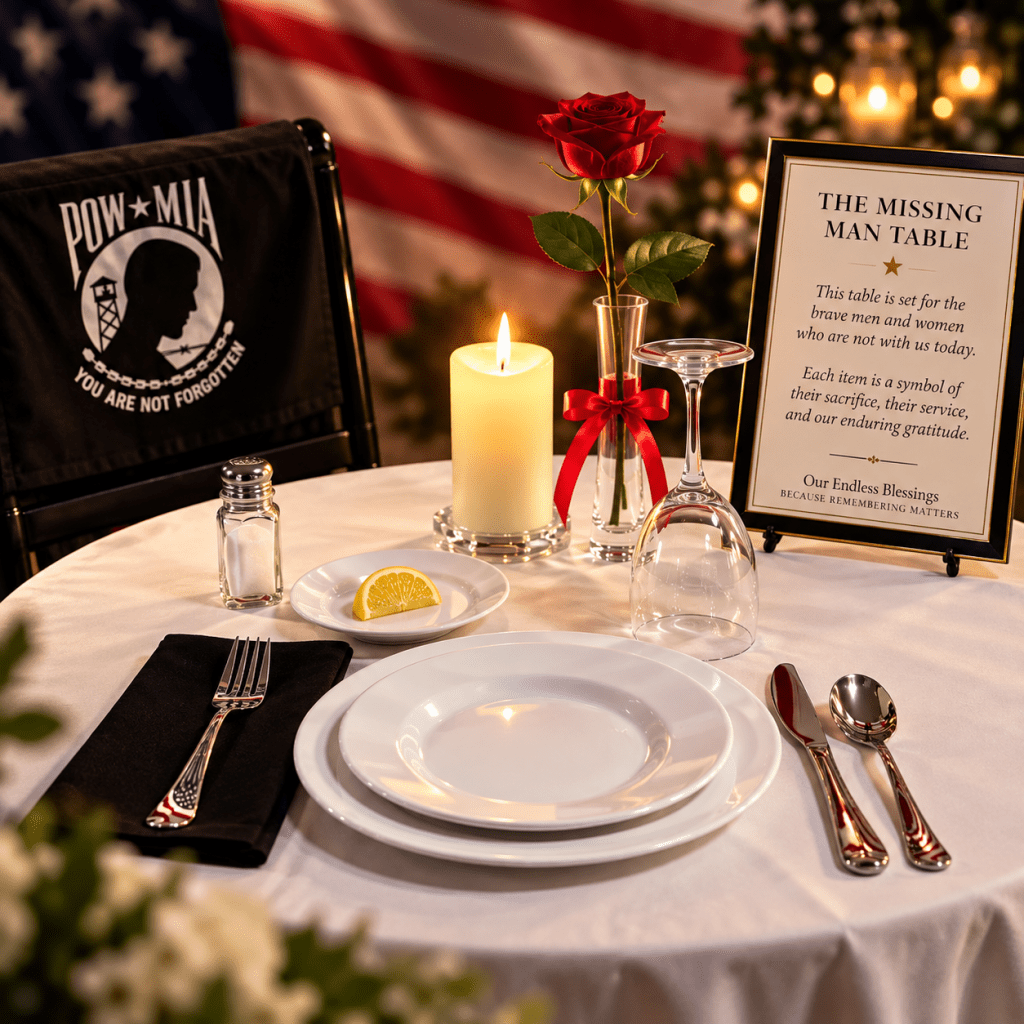
A slice of lemon sits on the bread plate. It’s there to remind us of their bitter fate — captured, missing, unaccounted for.
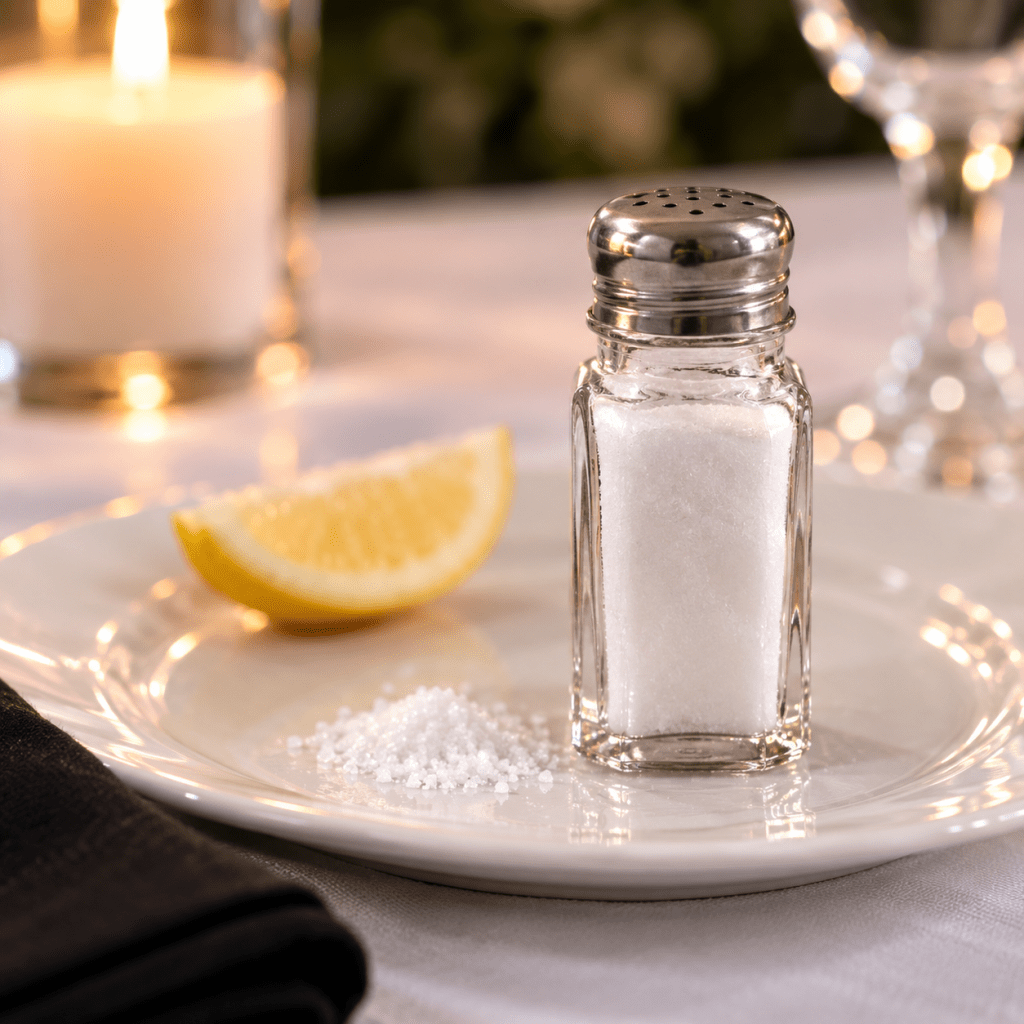
The salt on the plate
Next to the lemon, a pinch of salt. It stands for the tears of the families — the ones still waiting, still hoping, year after year.
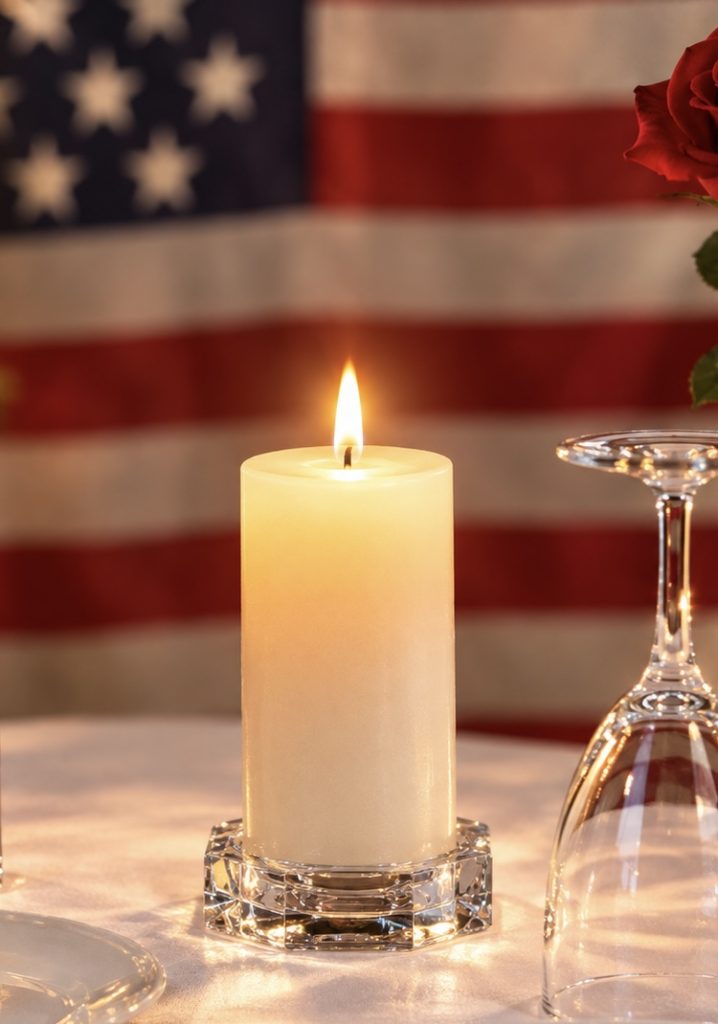
The candle
A lit candle stands on the table. It’s the light of hope that lives in our hearts — hope that lights the way home for those still missing.
The red rose, and the ribbon on the vase
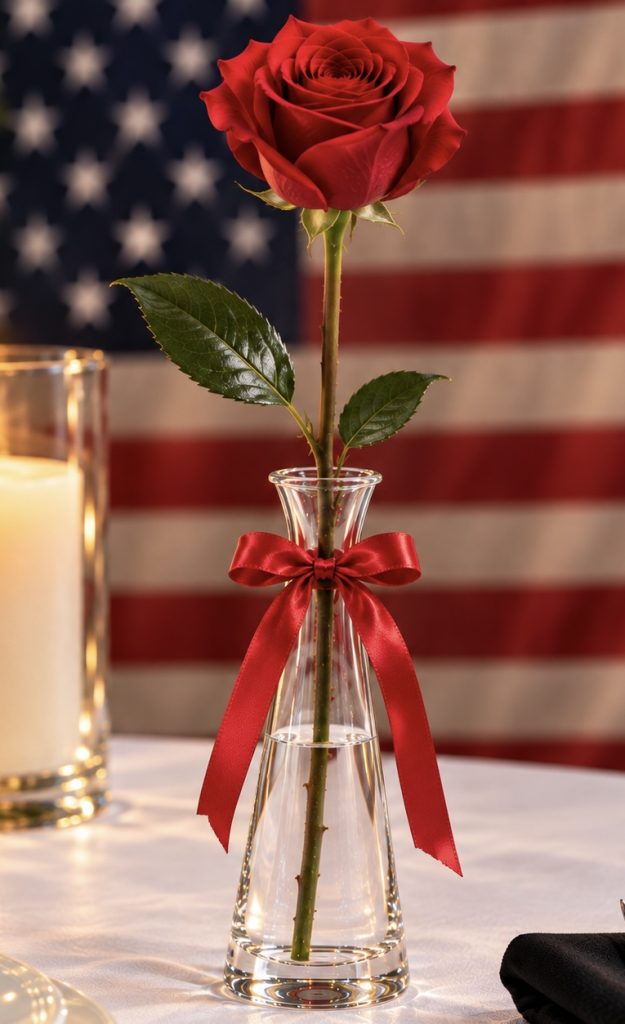
A single red rose sits in a vase. It’s for the blood that may have been shed, and for the families and friends who keep the faith while they wait.
The ribbon tied around the vase is usually yellow — it stands for hope, that they’ll come home, and that we haven’t stopped asking for answers. Some ceremonies and tables use a red ribbon instead, tying it back to the rose itself and to the blood shed in sacrifice. Either way, the meaning behind it is the same: we remember, and we haven’t stopped looking.
The Missing Man Table
Put together, it’s a small, round table — round because it stands for the everlasting concern we carry for those still missing. A white cloth covers it, for the purity of their intentions when they answered the call to serve. And an empty chair sits at it. It always will.
This tradition has been carried forward by veteran organizations for decades — not a military regulation, just a promise, kept quietly, one table at a time.
If you want to observe the day: fly the POW/MIA flag if you have one, or check whether your local VFW post, American Legion, or national cemetery is holding a ceremony. Most are.
You can also set up your own Missing Man Table at home, at school, or in your workplace. It doesn’t take much — a small table, a white cloth, and the items above. It’s a meaningful way to bring children and young adults into this tradition, and to make sure the next generation understands why we remember.